A Showroom Inspired by the Structure of a Geode
The 1,600 m² space transforms ceramic display into architecture, where material, light, and spatial narrative redefine the traditional tile showroom.
 Geoda is the new corporate showroom for Geotiles, an interior architecture project designed by Summumstudio that rethinks ceramic display from a spatial, architectural, and essential perspective. Conceived as an experiential journey, the space moves away from the traditional sample showroom concept to build a narrative in which ceramics act as both structural material and a defining element of the space
The architectural concept is rooted in the very naming of Geoda. Understood as a stone with a solid, strong, and robust exterior appearance, it evokes a sense of material solidity aligned with the brand’s values. Yet inside, it holds a gem that reveals its full beauty. This duality between a powerful outer shell and a more expressive interior becomes the starting point of the architectural project and defines the showroom’s spatial logic.
With an approximate surface area of 1,600 m², the project is organized as a sequence of interconnected spaces that guide visitors through different atmospheres. From the entrance, the architecture proposes a gradual transition from more contained areas to broad and luminous exhibition zones, modulating perception through shifts in scale, rhythm, and materiality.
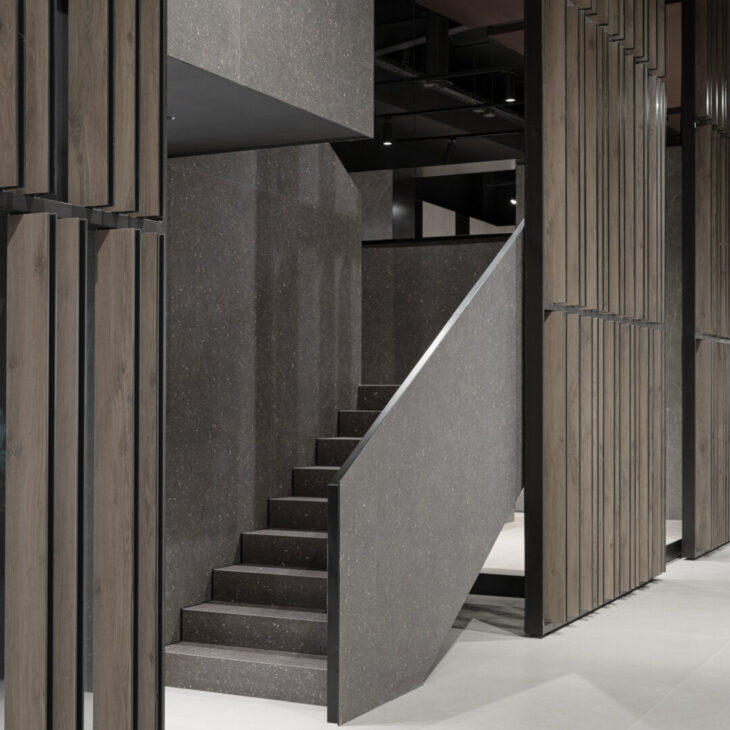
Summumstudio proposes a sober and timeless interior architecture in which ceramics are freed from their applied condition to become volume, mass, and constructive plane. Stairs, benches, tables, platforms, and walls are resolved as large-format ceramic pieces integrated into the spatial system itself. This decision allows the material to be displayed in real-use conditions, reinforcing its architectural and technical dimension.
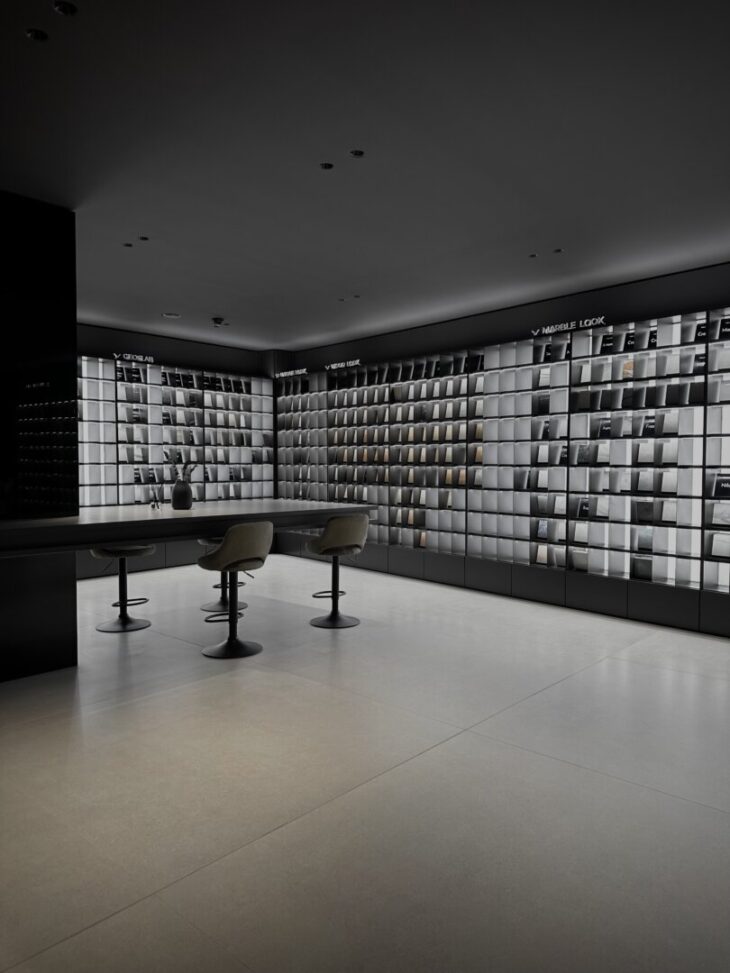
The showroom houses more than 2,000 ceramic references, organized into 26 technical settings and four real-scale spaces inspired by domestic environments. The exhibition route is structured by product families — woods, stones, marbles, cements, and large formats — combining technical areas with full-scale ambiences. Display walls coexist with inhabited spaces, creating a balance between abstraction and domestic or professional experience. The architecture acts as a silent support, organizing the discourse without imposing itself on the material.
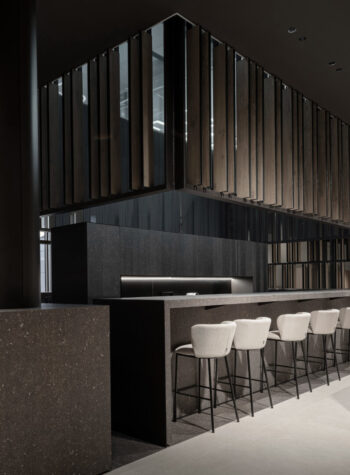
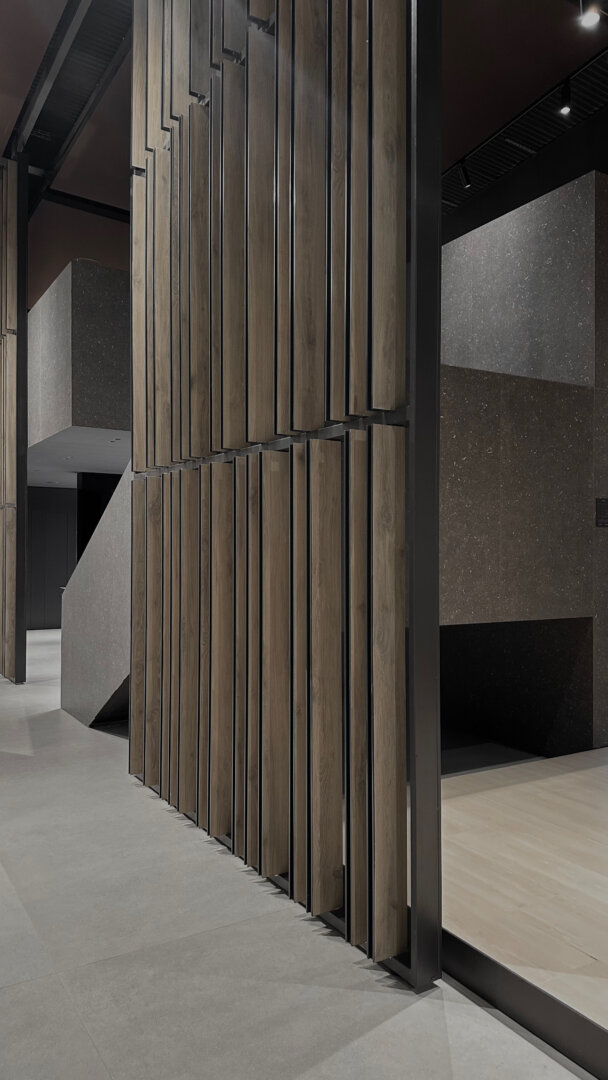 The latticework is incorporated as a continuous element throughout the showroom and becomes a key tool in organizing the visitor journey. Present at the crowning of the entrance hall and reception desk, it unfolds as a rectilinear skin that accompanies visitors and traces the path to follow. Its configuration allows different ambiences to be revealed or concealed in a controlled manner, establishing a visual strategy that progressively guides visitors toward the open interior courtyard, where the lattice becomes the defining skin of the ensemble.
Spatially, the showroom is organized according to a progressive order of conceptualization. The route begins in a purely material-exhibitive area, where ceramics are presented in their essential state. It then evolves into spaces with a higher degree of spatial definition, approaching real environments. The itinerary culminates in a loft-type area, where the settings are fully realistic, and ceramics integrate as the skin of elements with specific functionalities.
Lighting, carefully designed, accompanies the journey and enhances the reading of the material. Each texture and volume has been calibrated through a state-of-the-art interactive lighting system, activated with each visit and guiding users through a precise luminous choreography. Grazing and accent lighting emphasize textures, veins, and junctions, while more homogeneous illumination ensures the accurate technical appreciation of the pieces. The result is a controlled, almost museographic atmosphere that invites slow and attentive observation.
The project also incorporates meeting rooms, work areas, and professional service spaces, fully integrated into the architectural narrative. Among them stands out a singular private room, defined by a large, glazed wall with direct views of the factory, allowing visitors to discover the production process in real time and highlighting the company’s technology and craftsmanship. These spaces reinforce the idea of the showroom as an operational environment, not merely a representative one.
 Project Data
Project: Geotiles Showroom – Geoda
Location: Vila-real, Castellón
Surface area: 1,600 m²
Year: 2025
Interior architecture: Summumstudio
Client: Geotiles
Typology: Showroom / exhibition and corporate space
Main material: Large-format Geotiles ceramics
Photography: Fernando Alda

About Summumstudio
SUMMUMSTUDIO® is a strategic design consultancy with an interdisciplinary nature. It specializes in the design and development of corporate and private projects, focusing on the creation of value and the development and execution of distinctive projects in Interior Architecture, Industrial Design, and Branding.
At SUMMUMSTUDIO®, the Branding and Interior Architecture departments, despite being independent teams, function as communicating vessels, generating a very particular approach when designing any space. Each “movement” within an interior design project responds to a brand strategy whose sole objective is to add value and strengthen positioning.
This bilaterality also allows the studio to design and develop a graphic project in parallel, focusing on communication media, signage, and the creation and promotion of links between the space and the global brand strategy.